How many stages does one kilowatt-hour of electricity go through before traveling from a photovoltaic panel to lighting up a laboratory lamp?
The traditional answer would be:
Inverter → Distribution Cabinet → Transformer → …
Each device manages one part of the process. Energy flows through multiple conversion stages, with efficiency losses accumulating along the way.

Today, in a large-scale microgrid laboratory in China, the answer has become:
Just one.
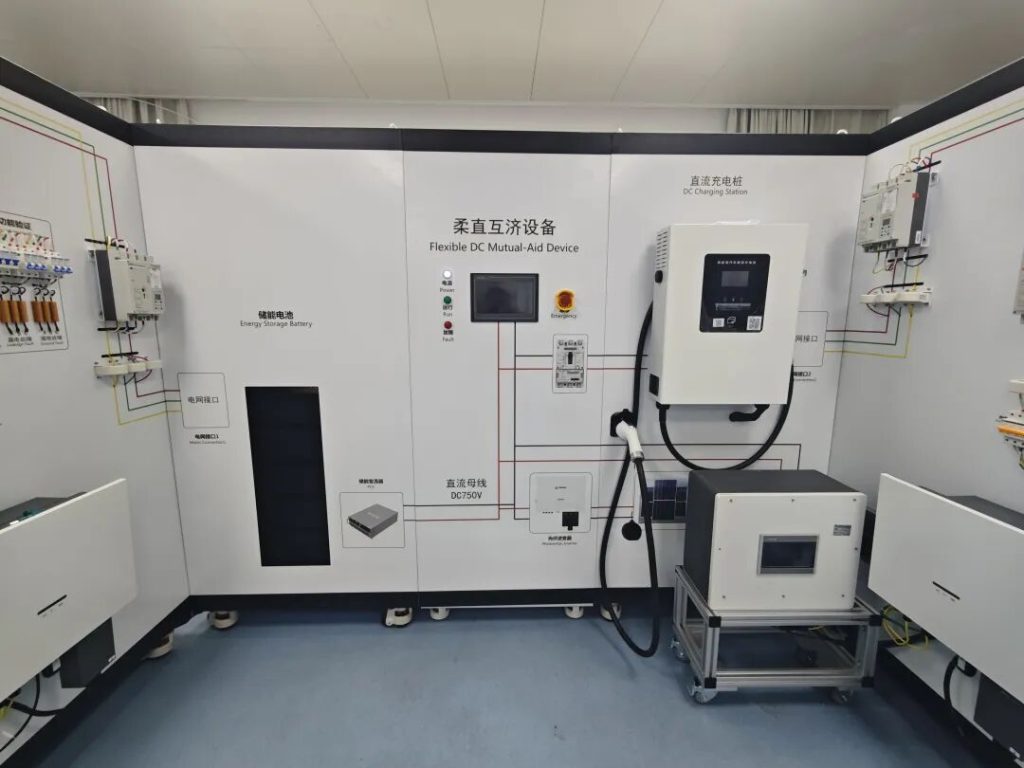
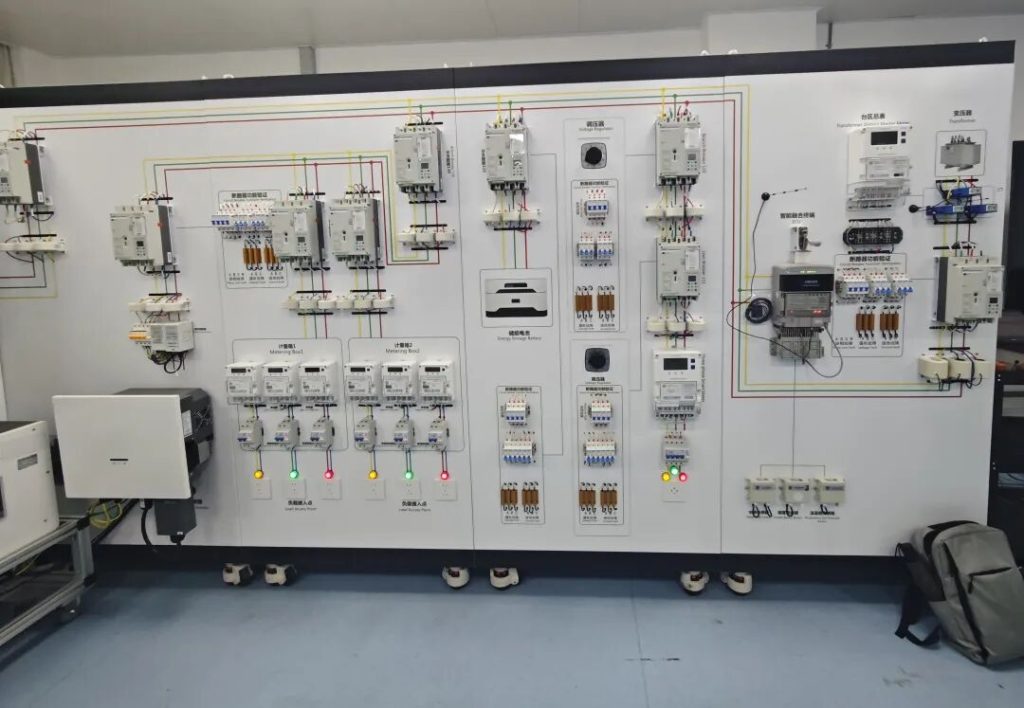
The multi-port PV + Storage + DC Flexible Power Router developed by GCEVO Energy has officially been deployed in this laboratory.
PV generation, energy storage, grid connection, EV charging, and AC/DC loads are all connected through a single 750V DC bus, integrating the entire “Source-Grid-Load-Storage” system into one cabinet.
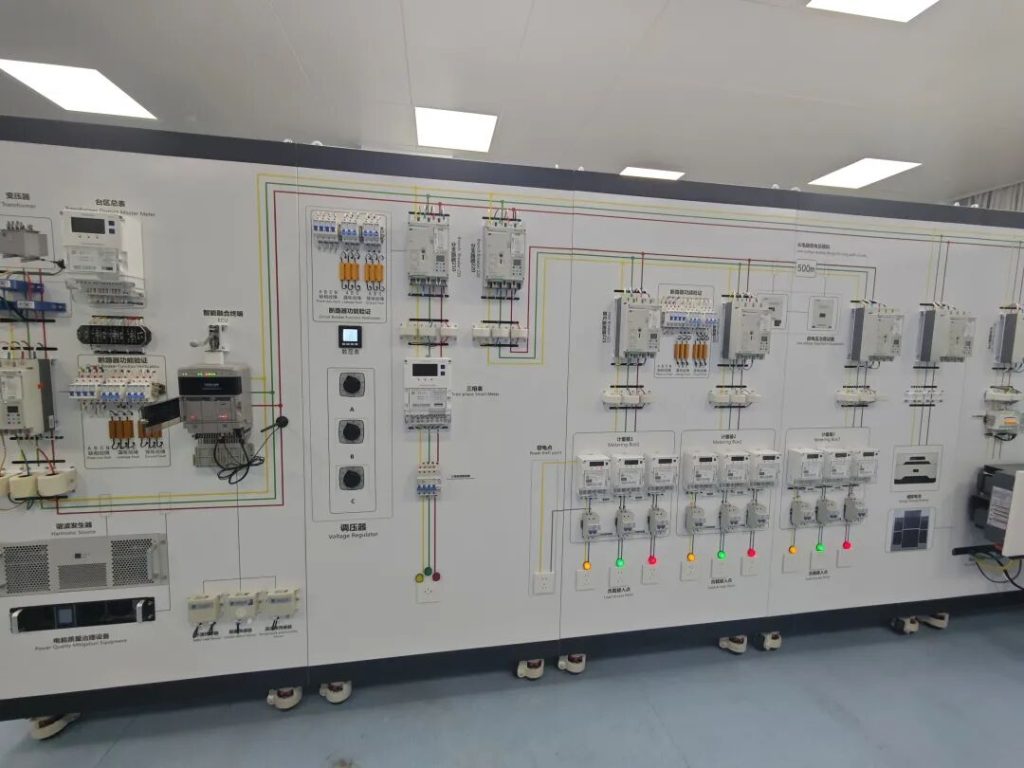
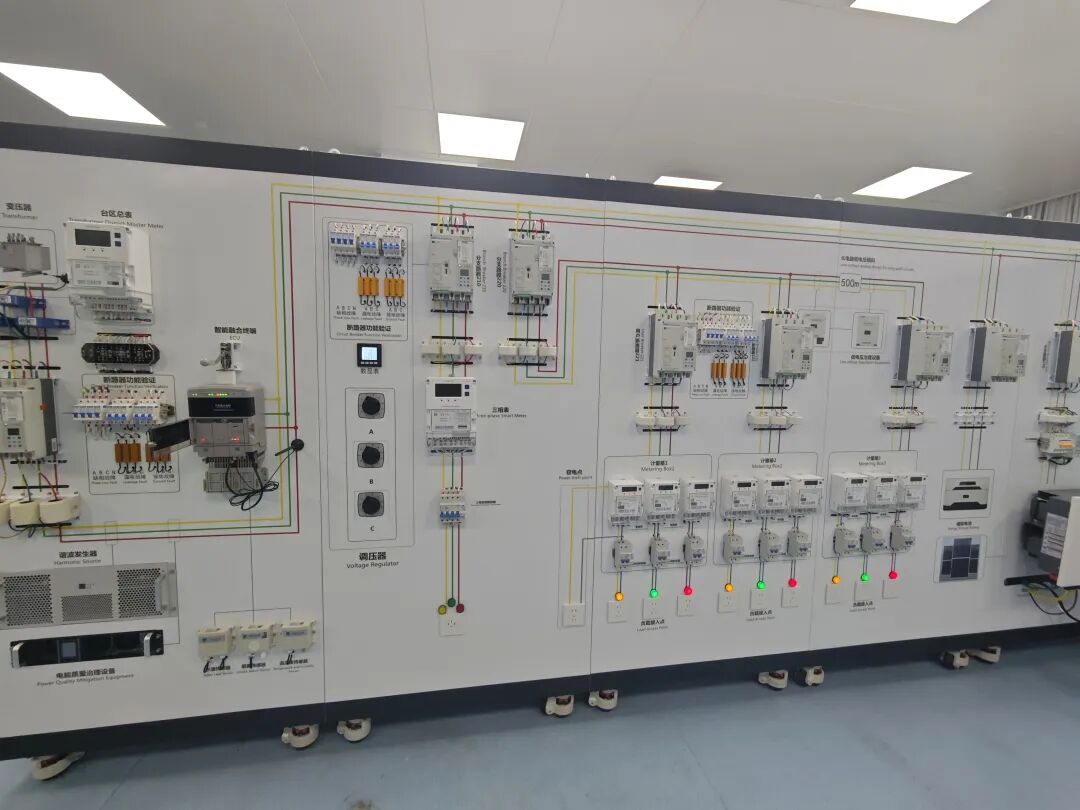
A Testing Platform for Next-Generation Microgrid Technologies
As a cutting-edge platform for microgrid technology validation, this laboratory has extremely demanding energy requirements.
The system needs to:
- Connect PV simulators to reproduce real photovoltaic generation profiles
- Integrate energy storage batteries to validate charging and discharging strategies
- Support DC charging piles for 750V DC fast-charging scenarios
- Supply AC loads
- Maintain two grid connection channels for bidirectional interaction with the power grid
With mixed AC/DC systems and multiple voltage levels coexisting, traditional power distribution solutions would require numerous cabinets and result in complicated efficiency calculations.
The solution:
A DZ-DCnex-PR5 Series Multi-Port PV + Storage + DC Flexible Power Router.
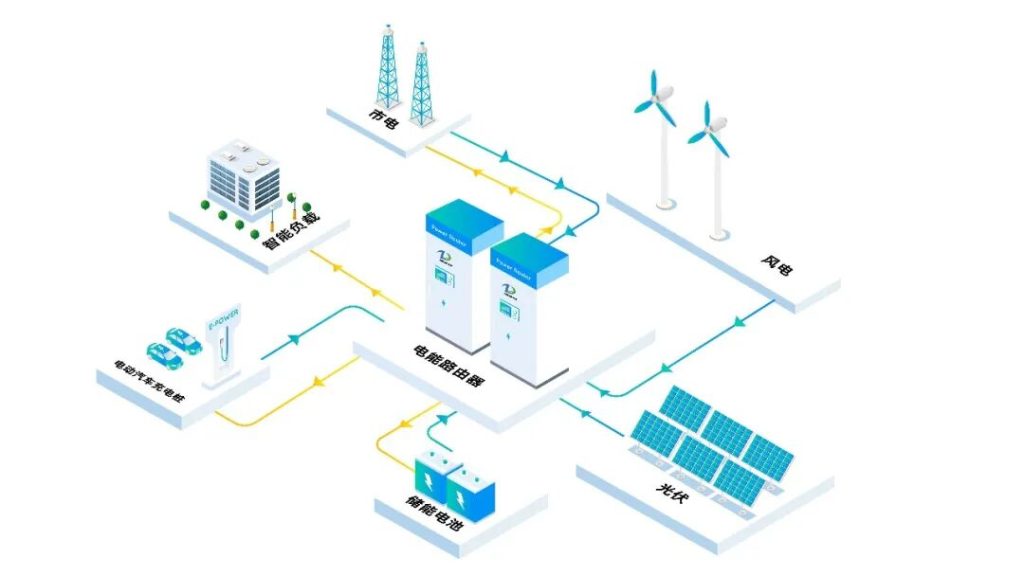
One Device Connecting Source, Grid, Load, and Storage
Using a 750V DC bus as the energy hub, the Power Router integrates generation, grid, loads, and storage into a unified energy network.
The system includes:
- Two bidirectional grid interaction ports
- PV input port supporting 200–750V DC wide voltage range
- 10kW / 20kWh lithium iron phosphate bidirectional energy storage port
- Two 10kW 380Vac AC load ports
- One 10kW 750Vdc EV charging port
The most impressive feature is its efficiency:
- Grid port peak efficiency ≥99%
- Energy storage port efficiency ≥99.3%
- Load port efficiency ≥99.8%
With fewer energy conversion stages and shorter power paths, energy losses are minimized and electricity costs are naturally reduced.
Three Flexible Operating Modes
▍Low-Carbon Grid-Connected Mode (Default)
The system prioritizes renewable energy utilization:
PV → Load → Energy Storage → Grid Export
Power supply priority:
PV > Battery > Grid
PV generation is first used locally. Surplus energy charges the battery, and only after the battery is fully charged is excess power exported to the grid.
▍Independent Operation Mode
When the grid fails:
The energy storage system takes over as the core power source, maintaining DC bus stability and ensuring critical loads remain powered for up to 4 hours.
▍Flexible Interconnection Mode
The system enables:
- Multi-distribution-area power sharing
- Dynamic capacity expansion
- Peak-load mutual support
- Emergency power backup
By allowing power resources to support each other, it reduces transformer investment requirements and lowers fixed electricity capacity costs.
Intelligent Control Strategies Make the System Truly “Alive”
Beyond hardware integration, intelligent control strategies are what bring the system’s real value.
▍Minimum PV Curtailment + Minimum Electricity Cost
Within safe operating limits and available capacity, the system continuously optimizes operation to maximize economic benefits.
▍Night-Time Valley Electricity Charging
During low-price electricity periods, the system automatically charges the energy storage battery.
The charging rate can be flexibly adjusted between:
0.1C–0.3C
balancing charging efficiency and battery lifetime.
▍Real-Time Carbon Accounting
Based on an emission factor of 0.5257, the system provides transparent carbon accounting.
Users can clearly monitor:
- PV generation carbon reduction
- Load electricity consumption
- Grid electricity carbon impact
making the carbon footprint visible and measurable.
Digital Monitoring and Intelligent Operation
The system is equipped with:
- 10.1-inch industrial touchscreen
- Data storage every 60 seconds
- Standard Modbus TCP communication interface
- Remote upgrade capability
Every experimental result and operational data point in the laboratory is recorded, traceable, and available for analysis.
From Passive Energy Consumption to Active Energy Management
Under the “Dual Carbon” goals, energy consumption is transforming from passive acceptance toward active management.
This laboratory is not only a technology validation platform but also a demonstration model.
The mature PV + Storage + DC Flexible technologies verified here can be replicated across a wide range of large-scale applications:
- Industrial parks
- Commercial buildings
- Data centers
- Zero-carbon communities
- Distributed microgrids
From optimizing the value of a single kilowatt-hour to enabling flexible energy interconnection across entire regions, the possibilities of microgrids are only beginning to unfold.
发表回复