
The revenue model of microgrids has evolved from the traditional “single electricity generation income” model into a diversified and integrated model combining:
- Basic cost reduction
- Energy market participation
- Value-added energy services
Depending on the microgrid connection type (On-grid or Off-grid) and operating entity, the core revenue models can be summarized into the following categories:
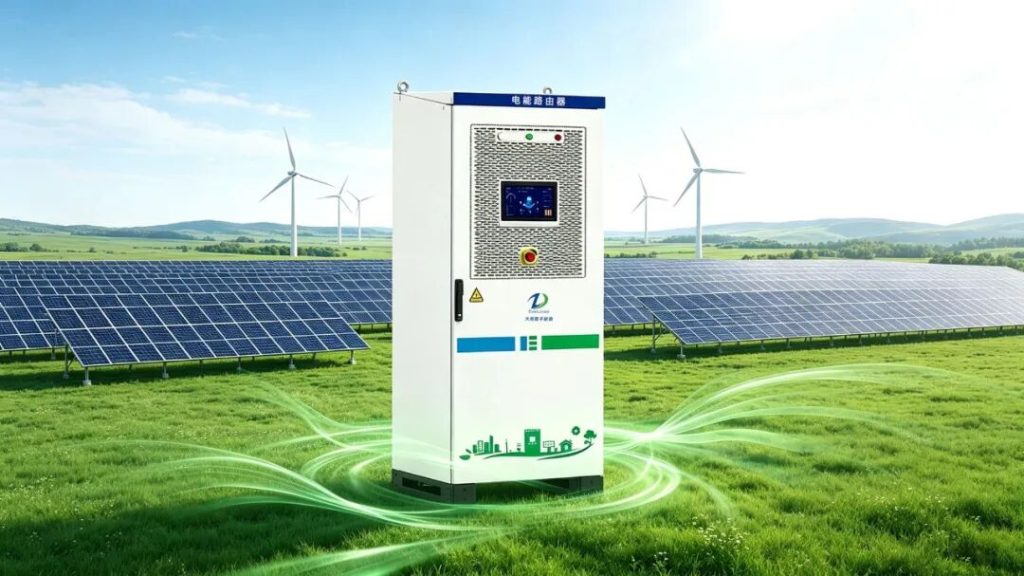
1. Self-Generation and Self-Consumption: Electricity Cost Savings
By prioritizing locally generated renewable energy such as photovoltaic (PV) and wind power to meet internal load demand, microgrids can replace high-cost grid electricity and directly reduce energy expenses.
This model is particularly suitable for commercial and industrial users with high electricity prices and large power consumption.
2. Revenue from Excess Electricity Export
Surplus renewable electricity generated within the microgrid can be exported back to the main grid through:
- Local feed-in tariffs
- Market-based electricity trading mechanisms
This generates additional electricity sales revenue and may also qualify for renewable energy incentives or subsidies depending on regional policies.

3. Peak-Valley Arbitrage
Enabled by the Power Router’s precise energy management and storage scheduling capabilities, microgrids can optimize battery charging and discharging strategies.
The system charges energy storage during:
- Low-demand periods with lower electricity prices
and discharges during:
- Peak-demand periods with higher electricity prices
The price difference between peak and valley periods creates economic benefits.
This model depends heavily on:
- Local peak-valley electricity price differences
- Energy storage system efficiency
- Battery lifecycle economics
4. Demand Response Revenue
Microgrids can participate in demand response programs by responding to signals from the grid or electricity market, such as:
- Peak load reduction
- Load shifting
- Flexible consumption adjustments
Through the flexible control capability provided by the Power Router, microgrids can:
- Adjust controllable loads
- Optimize power generation schedules
- Modify energy consumption patterns
and receive incentives or compensation from utilities or electricity markets.
5. Ancillary Service Revenue
By leveraging the regulation capabilities of microgrids, including:
- Energy storage peak regulation
- Frequency regulation
- Backup capacity provision
microgrids can participate in grid ancillary service markets.
By providing power balancing and stability support for the grid, they can obtain corresponding economic compensation.
6. Capacity Leasing and Shared Energy Storage Revenue
Excess energy storage capacity within a microgrid can be:
- Leased to other users
- Participated in shared energy storage programs
Revenue can be generated through:
- Capacity-based leasing fees
- Time-based service fees
This enables shared utilization and value realization of energy storage assets.
7. Green Electricity and Green Certificate Trading
With the Power Router as the core DC energy management device, microgrids can significantly improve local renewable energy consumption capacity, enabling high-proportion utilization of green electricity.
This supports participation in:
- Green electricity trading markets
- Green certificate (REC/I-REC) markets
to obtain premium revenue.
Meanwhile, carbon assets can be monetized through:
- Carbon allowance trading
- CCER (China Certified Emission Reduction) carbon credit transactions
transforming emission reduction benefits into economic value while enhancing project sustainability and commercial attractiveness.
8. Capacity Cost Reduction and Replacement Benefits
Through energy storage-based peak shaving, microgrids can:
- Reduce transformer demand charges
- Lower contracted capacity costs
In addition, energy storage can partially replace traditional transformer expansion requirements, creating value through:
- Avoided infrastructure investment
- Capacity optimization
9. Value-Added Energy Services Revenue
Microgrid operators can provide integrated energy services, including:
- Energy management services
- Energy efficiency improvements
- Energy audits and optimization
- PV + Storage + EV charging operation services
- EV charging service fees
Additional revenue can be generated by improving customer energy efficiency and delivering comprehensive energy solutions.
10. Asset Appreciation and Virtual Power Plant (VPP) Integration
With the GCEVO Power Router serving as the underlying energy control hub, microgrids can support virtual power plant (VPP) aggregation, coordinated control, and long-term asset value enhancement.
By integrating multiple distributed microgrid resources, a VPP can participate in electricity market transactions and achieve a dual revenue model:
Self-consumption + External market trading
This enhances the overall economic value and long-term asset appreciation potential of industrial parks and energy assets.
发表回复