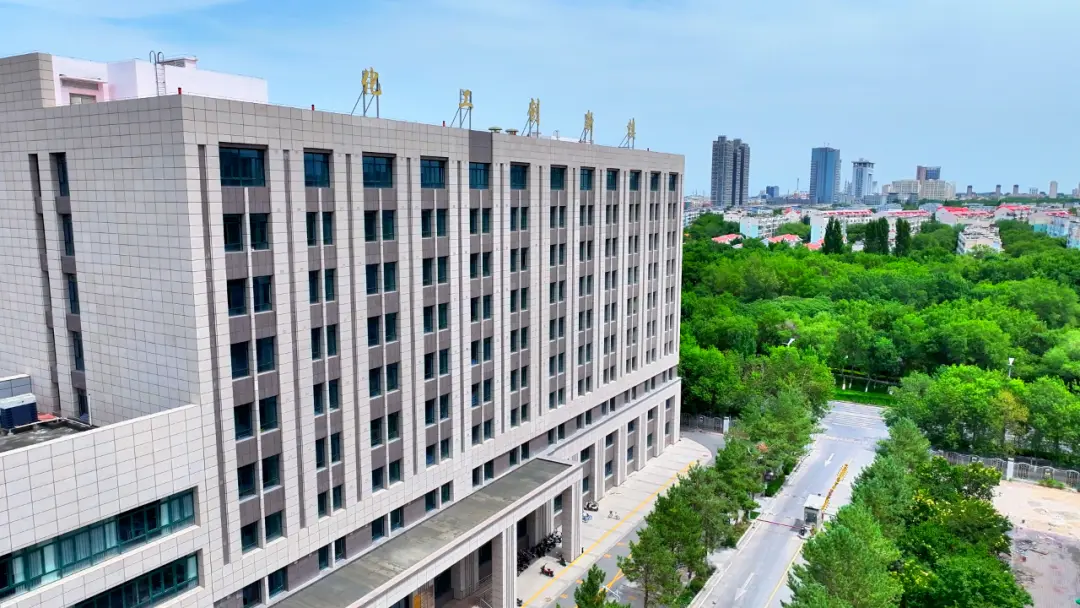
The story of Shihezi University dates back to 1949, when General Wang Zhen led troops into Xinjiang and established the first medical school of the First Corps of the People’s Liberation Army.
Guided by the resilient “Corps Spirit,” generations of teachers and students built this young campus together with settlers—laying foundations, digging pipelines, building teaching tools, and constructing the university while simultaneously holding classes.
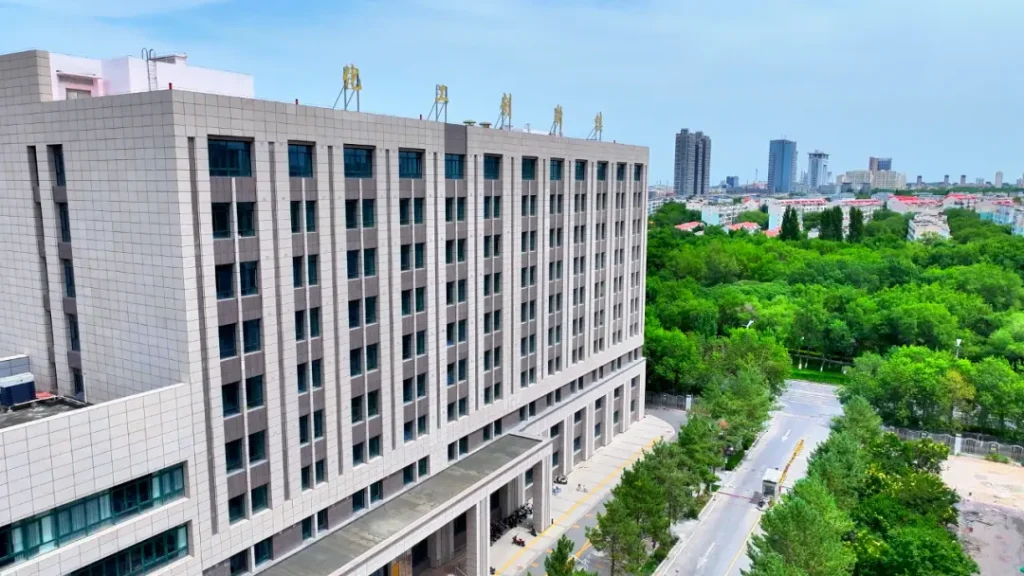
More than 70 years later, Shihezi University has become a national “211 Project” key university and a “Double First-Class” discipline construction university, cultivating a large number of outstanding graduates.
Many graduates chose not to developed cities, but instead rooted themselves in frontier regions—growing cotton at the edge of the Taklamakan Desert, working on water conservancy in the Ili Valley, and conducting geological exploration at the foot of the Kunlun Mountains.
This land has given Shihezi people a spirit of hardship and perseverance, as well as a natural geographical advantage—over 2,800 hours of annual sunshine, among the highest solar resources in China.
However, for many years, abundant sunlight and electricity demand have not been effectively coordinated.
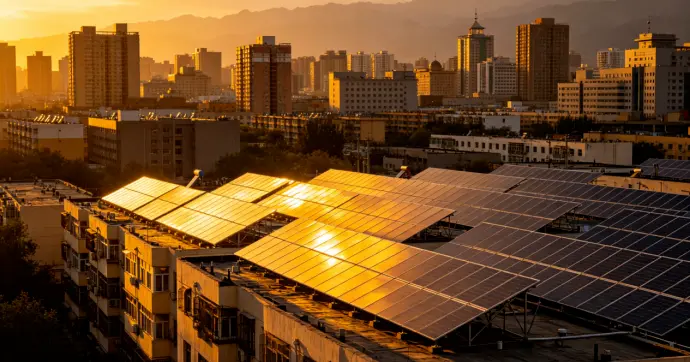
Although agricultural loads are stable and predictable, university campuses present complex load profiles, large peak-valley differences, and difficulties in renewable energy consumption. Rooftop PV systems often face a mismatch between generation and consumption:
- Excess electricity is sold to the grid at low prices, or
- The campus continues to rely on expensive grid electricity due to lack of unified dispatch
As a result, renewable energy is often “visible but not fully utilized.”
Energy waste is particularly evident in industrial and research environments. The experimental building of Shihezi University is a typical example.

Complex Energy Consumption in the Experimental Building
Compared with conventional office buildings, the energy system in the experimental building is significantly more complex:
▍Mixed Load Types
AC motors, DC instruments, and precision devices coexist in the same building. Traditional distribution systems supply power in a “one-size-fits-all” manner, ignoring different load characteristics, resulting in continuous energy conversion losses.
▍PV Curtailment and Mismatch
Rooftop PV generation does not align with building demand:
- Solar peak occurs at noon when labs may be idle
- Experimental peak occurs in the evening when PV output is unavailable
As a result, electricity is sold to the grid at low prices, while the building still purchases expensive grid electricity.
▍Peak-Valley Cost Inefficiency
Many devices operate 24/7. Peak demand often overlaps with grid peak pricing periods, resulting in high electricity costs.
▍Manual Energy Dispatch
Decisions such as when to use PV, charge storage, or draw from the grid rely on manual judgment, making real-time optimization impossible.
Although these issues do not directly cause outages, they continuously increase energy costs and waste electricity resources.
A New Approach at Shihezi University Experimental Building
To address these challenges, the experimental building adopted a new energy management approach.
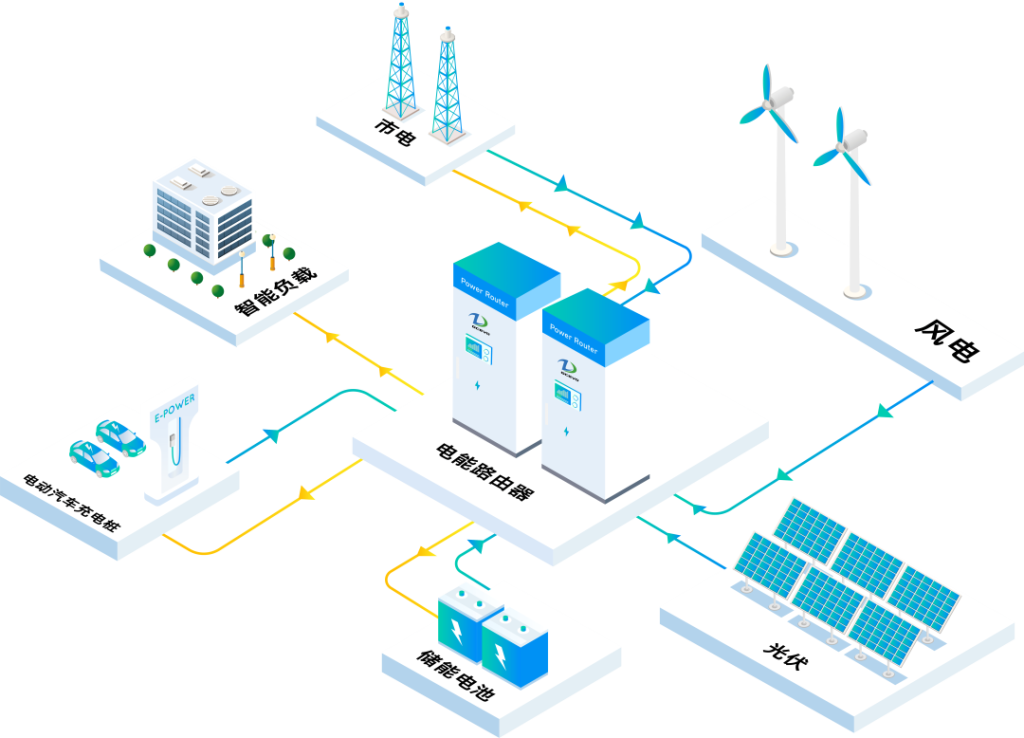
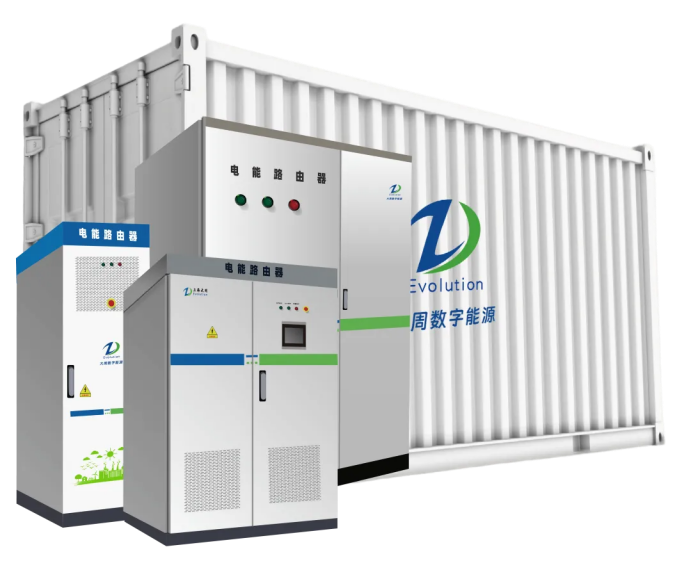
The Power Router is essentially a multi-port hybrid energy system.
It can be understood as the “intelligent energy dispatch hub” of the power system—just as a network router distributes data, the power router distributes energy, but with far greater capability for optimization.
▍Core Capabilities
1. Multi-source unified access
Grid power, photovoltaic generation, and energy storage are all connected through a unified platform.
PV-generated DC power can directly supply DC loads in the building, reducing AC/DC conversion losses.
2. Intelligent energy dispatching
The system continuously monitors energy status and load demand at each port, autonomously deciding:
- Where energy comes from
- Where energy flows
When solar output is sufficient, PV is prioritized.
During peak tariff periods, storage is dispatched.
When PV is surplus, energy is stored in batteries.
Every kilowatt-hour is allocated to the most cost-efficient use.
3. Economic optimization strategy
Based on time-of-use tariffs, PV feed-in prices, and consumption patterns, the system automatically generates optimal dispatch strategies.
Users do not need to understand energy scheduling—the system performs it automatically like a “financial optimizer for electricity.”
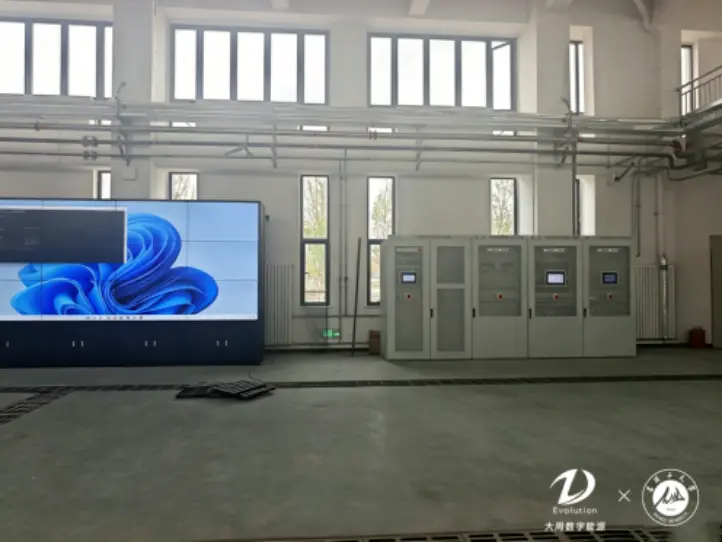
Real-World Validation at Shihezi University
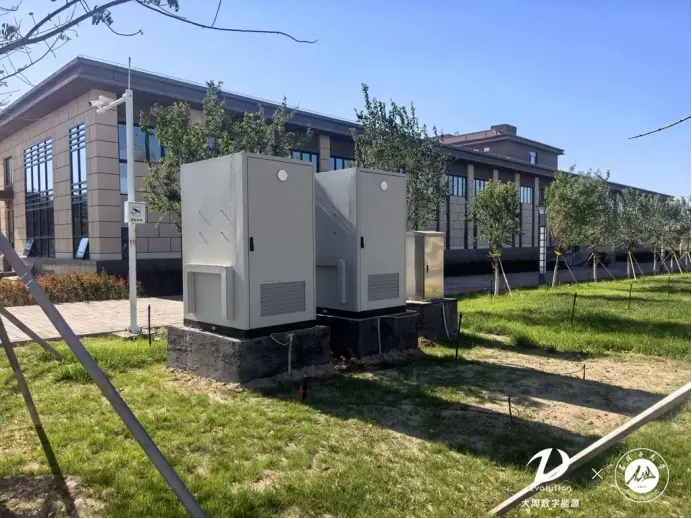
In practice, GCEVO Energy deployed a multi-port Power Router system in the experimental building.
The system features:
- 8 ports
- 750V DC bus architecture
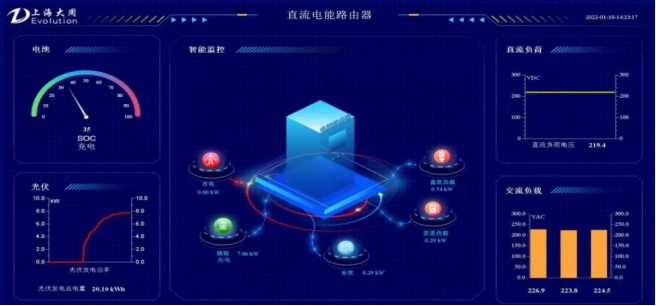
It transforms “multi-source integration, intelligent dispatching, and economic optimization” into measurable operational data.
The core value is not simply connecting energy sources, but ensuring that every kilowatt-hour is used efficiently.
Energy Dispatch Strategy
Daytime (sunlight available):
- PV supplies building loads first
- Excess energy is stored in batteries
- Once storage is full, remaining energy is exported to the grid
- Minimizes PV curtailment and maximizes utilization
Evening peak hours:
- Batteries discharge to support loads together with PV
- Grid power is used only when necessary
- Storage is prioritized during high-price periods to reduce cost
Night off-peak hours:
- Grid electricity is used to charge storage systems
- Charging rate: 0.1–0.3C
- Optimized for efficiency and battery lifespan
The system operates fully automatically and records data every 60 seconds, including voltage, current, power, and cumulative generation. All data is visualized and accessible remotely.
Application Beyond Universities
The Shihezi University case validates the feasibility of Power Routers in campus environments, but applications extend far beyond:
▍Industrial Parks
Multiple factories and production lines with diverse energy forms and significant peak-valley price differences benefit from PV + storage + intelligent dispatching.
▍Commercial Buildings
Air conditioning, lighting, and elevators create distinct load patterns. Peak shaving significantly reduces electricity costs.
▍Data Centers
Require extremely high reliability. Multi-source redundancy, intelligent dispatching, harmonic suppression, and voltage stabilization ensure safe operation of sensitive equipment.
▍Remote Microgrids
In areas with weak grid coverage, Power Routers combined with PV and storage enable independent microgrid systems.
Sunlight from the Gobi Desert has now entered the laboratory.
And the logic that enables full utilization of solar energy is expanding beyond universities into more scenarios:
- Industrial parks
- Commercial buildings
- Data centers
- Remote microgrids
Wherever energy optimization is needed, the Power Router will be deployed.
发表回复