分类: 未分类

  • Successful Closing | IEEE ICDCM 2026 (8th International Conference on DC Microgrids)!

    Successful Closing | IEEE ICDCM 2026 (8th International Conference on DC Microgrids)!

    The 2026 IEEE 8th International Conference on DC Microgrids (ICDCM 2026) has successfully concluded in Xi’an, China.

    As a flagship conference of the IEEE Power Electronics Society, and the only IEEE international conference dedicated exclusively to DC microgrids, ICDCM 2026 focused on in-depth discussions around:

    • Innovative applications of DC microgrids
    • Improvement of distribution and utilization efficiency
    • High-efficiency renewable energy integration
    • Advanced power electronics equipment
    • Engineering practices and real-world deployment

    With the rapid global deployment of renewable energy, distributed photovoltaics, energy storage systems, and DC loads continue to expand.

    However, traditional power systems are increasingly facing challenges such as:

    • Limited dispatch flexibility
    • Inefficient renewable energy absorption
    • Grid integration bottlenecks

    Against this backdrop, DC microgrids, with their high efficiency, flexibility, and reliability, are becoming a core solution for next-generation power systems worldwide.

    As the energy brain and central hub of DC microgrids, the Power Router plays a critical role in system architecture.

    It is responsible for:

    • Power conversion and energy routing
    • Intelligent energy distribution
    • Bidirectional networking of energy flows
    • Stable system coordination and control

    It serves as the key enabler for the coordinated operation of:

    • Renewable energy sources
    • Energy storage systems
    • Electrical loads
    • Utility grids

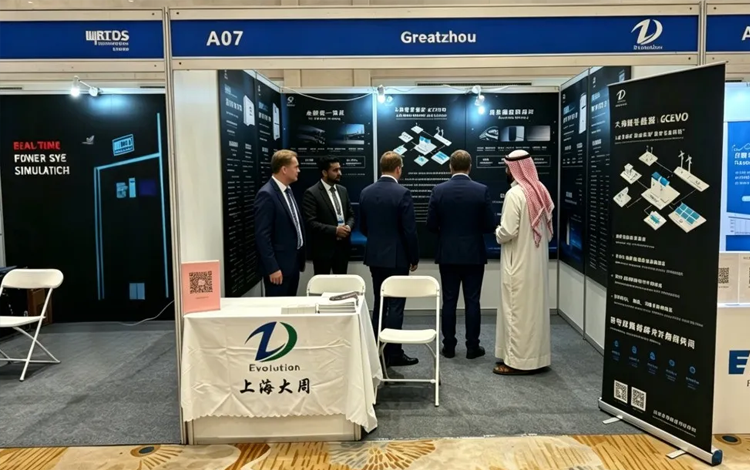
    GCEVO Energy’s multi-port Power Router was showcased at this international conference as a benchmark product for next-generation power systems.

    With its self-developed power electronics topology and intelligent scheduling algorithms, it effectively addresses global challenges in:

    • Distributed renewable energy grid integration
    • Microgrid energy management
    • System-level energy optimization

    It is suitable for a wide range of scenarios, including:

    • Industrial and commercial parks
    • On-grid/ off-grid energy storage systems
    • Flexible distribution at transformer level

    Providing global customers with an integrated smart microgrid control and energy management solution.

    At the exhibition, four standardized Power Router products were presented, forming a complete power range to meet different global microgrid requirements:

    Designed for indoor applications such as distribution rooms and small/medium industrial control rooms.

    Suitable for large indoor environments such as industrial plants and large-scale distribution rooms.

    Designed for both indoor and outdoor deployment, including outdoor on-site installation and unmanned operation scenarios.

    Suitable for large-scale outdoor applications and integrated energy projects.

    The full product series supports:

    • AC/DC hybrid grid connection
    • Multi-port bidirectional energy scheduling
    • Dynamic power optimization
    • Decentralized intelligent networking

    It provides hardware support for:

    • Smart energy parks
    • DC buildings
    • Rural microgrids
    • Distributed photovoltaic systems
    • Integrated energy storage projects

    Covering residential, commercial, and large-scale industrial energy systems.

    With its comprehensive product portfolio and advanced technological capabilities, GCEVO Energy demonstrated strong innovation strength in the field of DC microgrid core equipment at ICDCM 2026.

    This exhibition marks a deep exchange between GCEVO Energy and global frontier technologies in DC microgrids.

    Looking forward, the company will continue to iterate its full-range Power Router product platform, continuously advancing core technologies in microgrid energy management.

    GCEVO Energy remains committed to providing intelligent energy dispatch solutions for global energy scenarios, working with international partners to build a more efficient, low-carbon, and intelligent DC energy ecosystem.
  • Zero-Carbon Building Benchmark | Shanghai Lingang Headquarters of China MCC: PV + Storage + DC Flexible System Enabled by GCEVO Power Router for a Smart Green Energy Ecosystem

    Zero-Carbon Building Benchmark | Shanghai Lingang Headquarters of China MCC: PV + Storage + DC Flexible System Enabled by GCEVO Power Router for a Smart Green Energy Ecosystem

    The low-carbon future of cities is never just a slogan, but a profound transformation in how buildings consume and manage energy.

    While many office buildings still rely heavily on conventional grid power and high-energy consumption operation models, a quiet energy revolution is unfolding in Shanghai’s Lingang New Area.

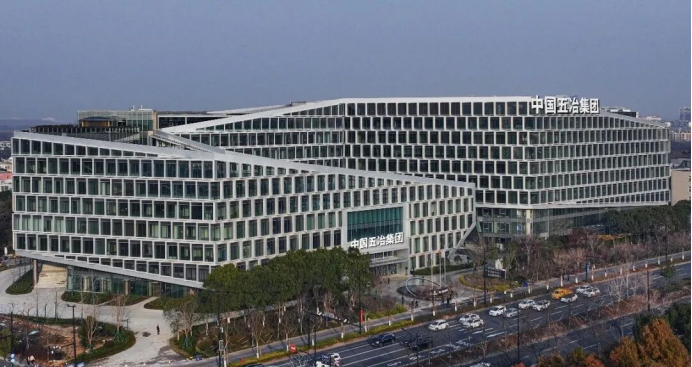
    Here, a landmark building has been created—the China MCC Lingang Headquarters Building (hereinafter referred to as “MCC Group”), the first regional benchmark building truly achieving zero-energy consumption and zero-carbon operation.

    From the very beginning of its design, the building has moved beyond traditional energy logic. Instead of relying solely on energy-saving measures, it establishes a self-generated, self-consumed, and self-circulating green energy system.

    As low-carbon transformation shifts from concept to implementation, PV + Energy Storage + DC Flexible Technology (PV-Storage-DC-Flexibility) has become a critical foundation for ultra-low-energy buildings.

    What enables MCC Group to achieve energy autonomy and controllability?

    The answer lies in the core equipment supporting the building’s green energy dispatch system.

    As a benchmark zero-energy office building in Lingang New Area, MCC Group adopts a multi-port GCEVO Power Router standard platform, implementing an innovative PV + Storage + DC Flexible energy solution. This establishes a safe, reliable, intelligent, efficient, and low-carbon DC microgrid system, providing the technological foundation for autonomous green energy supply, flexible energy consumption, and precise carbon management.

    The MCC Group project is built on a 750V DC bus architecture, forming an integrated green energy supply system.

    It seamlessly integrates multiple energy sources, including solar power, grid electricity, and lithium battery storage, while flexibly supporting various DC loads and multi-voltage requirements, enabling efficient energy interconnection across all scenarios.

    The system is equipped with a multi-port PV-Storage-DC Flexible Power Router, featuring:

    • Grid port: 200 kW
    • PV port: 20 kW
    • Energy storage port: 150 kW
    • 120 kW unidirectional 750V DC charging pile
    • 7 kW bidirectional V2G charging pile
    • 60 kW 375V DC load

    This configuration covers the full energy lifecycle, including:

    • Power generation
    • Energy storage
    • Load consumption
    • Grid interaction
    • Vehicle-to-grid (V2G) interaction

    It enables a new paradigm for zero-carbon building energy systems.

    As the control and dispatch center, the Power Router is further integrated with:

    • Four 150 kW / 320 kWh energy storage systems already deployed in the park
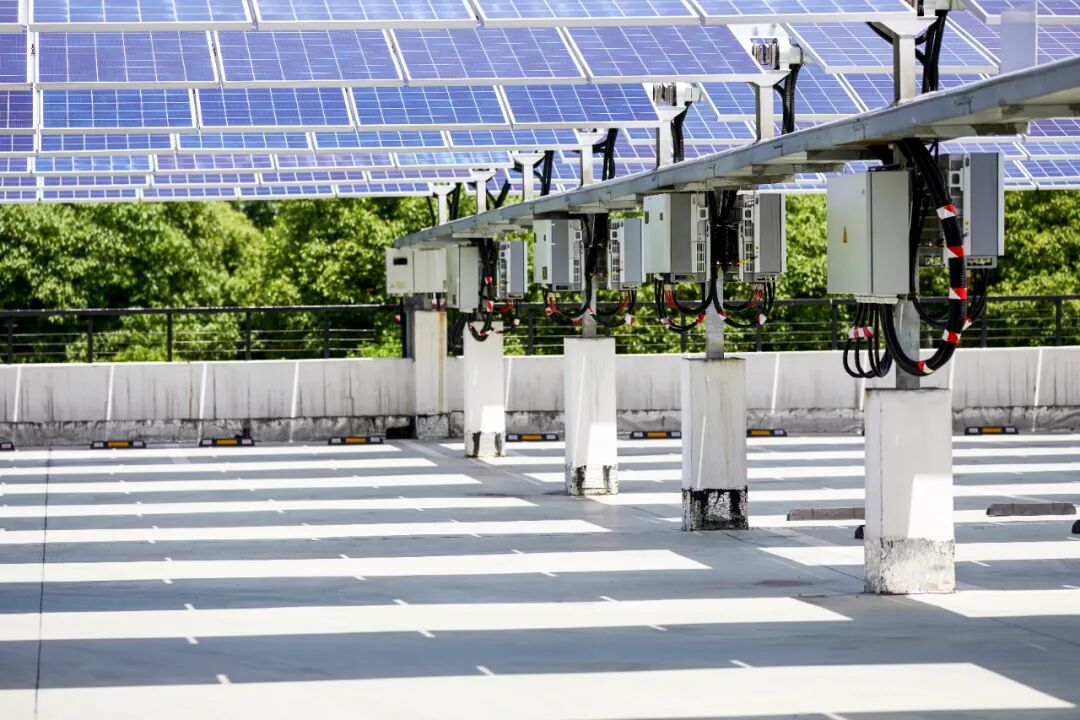
    • A 510 kW photovoltaic AC grid-connected system
    • The upper-level EMS (Energy Management System) of the building owner

    The system receives control instructions from the upper EMS while uploading all real-time operational data, enabling full hierarchical energy coordination and digital management.

    The system layout is designed with both practicality and maintenance efficiency in mind:

    • Indoor wall-mounted Power Router installation
    • Outdoor standardized energy storage cabinet deployment
    • Cable entry/exit from the top with front-side maintenance access

    This significantly improves operational and maintenance efficiency.

    Charging piles are connected to the grid platform, and the entire system is installed in the basement of the building. It is equipped with 4G communication modules and reserved RJ45 interfaces, enabling remote intelligent monitoring and control.

    This ensures more efficient and convenient energy dispatch, fully supporting the smart office requirements of the headquarters base.

    The MCC Group PV + Storage + DC Flexible project transforms technical standards into real zero-carbon performance.

    From multi-source energy supply to intelligent dispatching, from precise carbon measurement to flexible response implementation, every parameter reflects strong technical capability, and every design detail aligns with the vision of green and low-carbon development.

    The project not only establishes a solid zero-carbon energy foundation for MCC Group, but also sets a benchmark for the application of PV + Storage + DC Flexible technologies in Lingang New Area.

    It provides a replicable and scalable model for the low-carbon transformation of modern buildings, offering a practical reference for future zero-carbon building development worldwide.

  • Implemented at Jiaxing High-Speed Railway Cultural Center | How Power Routers Enable a New Paradigm for Zero-Carbon Landmark Buildings

    Implemented at Jiaxing High-Speed Railway Cultural Center | How Power Routers Enable a New Paradigm for Zero-Carbon Landmark Buildings

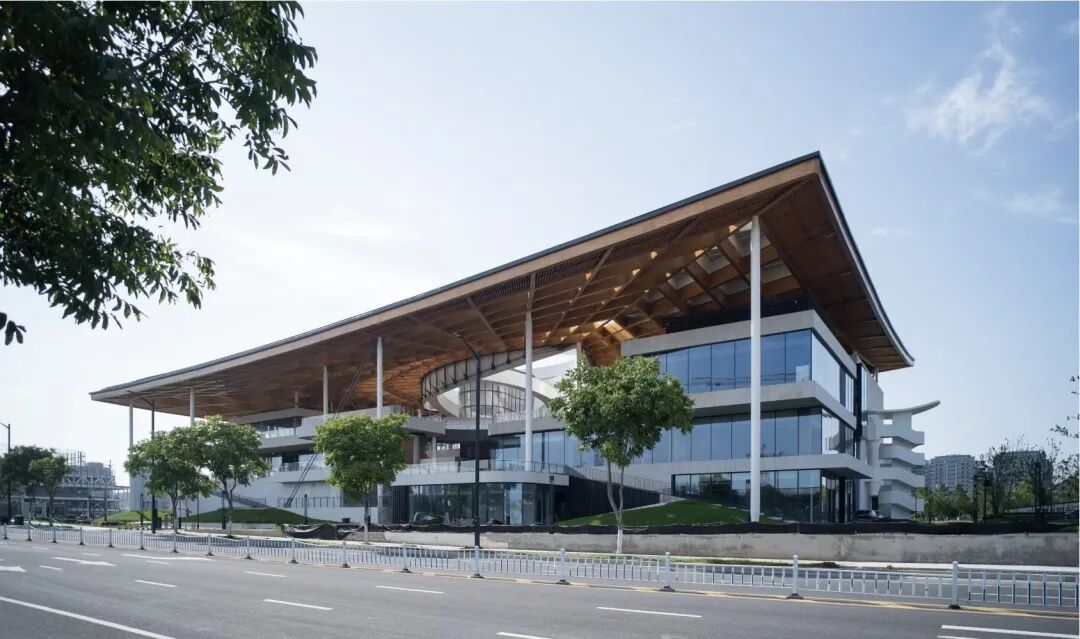
    City Jiaxing is characterized by an extensive river network and interconnected waterways.The Jiaxing High-Speed Railway New Town Cultural Center is located on a riverside peninsula and has been carefully designed to become an open, inclusive, and iconic urban cultural landmark.

    As a core supporting facility of the “One Park, Seven Centers” super future community in the Shuangxi Lake area of Jiaxing Economic Development Zone, the project has attracted significant attention and high expectations since its planning stage.

    From the very beginning of its design, the project followed the principle of not obstructing the waterfront and actively integrating with nature.

    It transforms diverse cultural functions such as performances and exhibitions into “seeds” that grow within this ecologically rich landscape, forming an open, functional, and vibrant public building.

    As the building embraces both the city and nature with an open posture, the Power Router serves as the energy dispatch hub, enabling stable and efficient coordination between the building and its energy system.

    As a landmark building in the Yangtze River Delta transportation hub region, the Jiaxing High-Speed Railway Cultural Center has adopted the DZ-DCnex PR7-250K multi-port PV + Storage + DC Flexible Power Router as a first implementation.

    With a one-stop energy management solution, it effectively addresses key challenges in large buildings such as:

    • High energy consumption
    • Difficult load dispatching
    • Lack of system flexibility

    It has become a new benchmark for green building transformation.

    Traditional building energy systems often face challenges such as:

    • Distributed equipment
    • Incompatible interfaces
    • Low operational efficiency

    Systems like PV, energy storage, EV charging, and HVAC typically operate independently, leading to high construction costs and complex maintenance.

    The core advantage of the Power Router lies in its integrated system design, enabling a single device to connect the full building energy chain including:

    • PV generation
    • Energy storage
    • EV charging
    • HVAC systems
    • AC grid access
    • DC loads

    It integrates seven key functional ports to support all energy scenarios of the Jiaxing High-Speed Railway Cultural Center.

    This includes:

    • Bidirectional grid power exchange
    • Efficient EV charging
    • Direct utilization of solar energy
    • Peak shaving and valley filling via energy storage
    • DC power supply for building HVAC and low-voltage systems

    A single device enables full coverage without the need for additional complex auxiliary systems.

    This significantly reduces equipment investment and construction costs, transforming building energy management from a multi-system patchwork into a one-stop integrated solution, greatly simplifying both deployment and O&M.

    For large-scale buildings, the core requirements of energy management are always cost reduction and efficiency improvement. GCEVO Energy addresses both directly through real-world application scenarios.

    • DC direct power supply reduces conversion losses
    • Energy storage enables peak shaving and valley filling strategies
    • Effectively reduces electricity costs during peak pricing periods
    • Reduces equipment procurement and installation costs
    • Simplifies long-term maintenance and operation

    • Enables efficient utilization of photovoltaic energy
    • Transforms buildings from “energy consumers” into energy producers and managers
    • Improves overall energy utilization efficiency
    • Supports achievement of zero-carbon building targets

    The implementation of the PV + Storage + DC Flexible system at the Jiaxing High-Speed Railway Cultural Center fully demonstrates the market value of the Power Router.

    It is no longer just a power conversion device, but a core enabler of building energy transformation.

    Whether applied in:

    • Railway hubs
    • Commercial complexes
    • Data centers
    • Industrial parks

    This solution can be flexibly adapted to diverse energy scenarios, providing a practical, scalable, and highly effective pathway for building energy upgrades.

    It is driving more buildings toward a new era of green, efficient, and intelligent energy management.

  • County WeiChang Source-Grid-Load-Storage Integrated System | A Replicable Future Model for Rural Energy Development in China

    County WeiChang Source-Grid-Load-Storage Integrated System | A Replicable Future Model for Rural Energy Development in China

    When mentioning Weichang Manchu and Mongolian Autonomous County in Hebei Province (hereinafter referred to as “Weichang County”), what comes to mind first?

    Is it the vast forest sea of Saihanba, or the starry sky over the grasslands?

    It is the only county in China established due to imperial hunting grounds. More than 300 years ago, it was known by a name recorded in history—Mulan Paddock (Mulan Weichang).

    Located in the northeast of Hebei Province, Mulan Weichang is a jewel embedded along the southern edge of the Inner Mongolia Plateau.

    In 1677, Emperor Kangxi visited this region during his northern inspection tours. Struck by its unique landscape of mountains and rivers, he designated it as a royal hunting ground.

    History gave this land its name “Weichang,” while the present it new meaning. Today, it is not only a poetic landscape of grasslands and winds, but also one of China’s first pilot counties for rural energy revolution.

    The core mission of this initiative is to establish a new energy power system capable of fully supporting electricity demand across economic activities, industrial operations, industrial parks, and tourism.

    Previously, during peak electricity demand periods, issues such as voltage instability and unbalanced power dispatch frequently occurred.

    These problems not only affected the quality of production and daily life, but also meant that clean energy generated from PV, storage, and loads could not be fully utilized—limiting the effectiveness of the energy transition.

    The key to addressing these challenges lies in the PV + Storage + EV Charging system with feeder-level flexible interconnection, customized by GCEVO Energy for Weichang County.

    At the core of this solution is the PV-Storage-DC Flexible Power Router, which functions as the “intelligent dispatch hub” of the power grid.

    It enables flexible energy flow among photovoltaics, energy storage, and loads, ensuring stable power supply while maximizing renewable energy consumption.

    This injects stable and reliable power into a region carrying the mission of energy transformation.

    How powerful is the system?

    It features millisecond-level response (≤10ms automatic switching). When the grid fails, it switches instantly, ensuring uninterrupted power supply—even in off-grid operation.

    • 375 kVA bidirectional grid port
    • 480 kWp PV port
    • 400 kW energy storage port
    • Online UPS module for fluctuation suppression
    • Supports up to 4 hours of off-grid load supply

    • 320 kVA bidirectional grid port
    • 400 kW PV / storage ports
    • 150 kW DC load port
    • Supports up to 2 hours of off-grid load supply

    These systems act as an intelligent “energy transportation hub,” dynamically coordinating power from PV, storage, and the grid.

    They are specifically designed to support high-demand scenarios such as:

    • Agricultural and livestock cold-chain systems
    • Rural tourism EV charging infrastructure

    Rural energy transformation requires exactly this level of stability and reliability.

    The project also includes:

    • 1 × 200 kW dual-port low-voltage flexible interconnection Power Router at feeder level
    • Enables bidirectional power flow and reactive power regulation between two distribution areas
    • Solves load imbalance issues

    Additionally, both PV + Storage + EV charging systems are equipped with:

    • 400 kW / 800 kWh DC-side energy storage systems
    • 80% depth of discharge capability
    • Time-based charging and discharging configuration

    The system collects real-time electrical parameters every 60 seconds for monitoring and optimization.

    From solving electricity dispatch challenges to strengthening the energy foundation for industrial development, GCEVO Energy leverages PV + Storage + EV Charging and flexible feeder-level interconnection technologies to empower Weichang County with comprehensive green development momentum.

    In the future,GCEVO Energy will continue to deepen its work in rural energy systems.

    With advanced flexible interconnection technologies, the company will support pilot region development, contribute to rural revitalization and China’s “Dual Carbon” goals, and enable every part of rural land to benefit from the transformation brought by digital energy.

  • Benchmark Project Empowered by a Utility Power Company | Grid-Tied Power Router Strengthens Core Support for PV + Storage + EV Charging Systems

    Benchmark Project Empowered by a Utility Power Company | Grid-Tied Power Router Strengthens Core Support for PV + Storage + EV Charging Systems

    Today, the rapid deployment and upgrading of EV charging and battery-swapping infrastructure across China is accelerating.

    The PV + Storage + EV Charging integrated energy station has become a key development direction in the new energy and integrated energy sector.

    Whether in urban commercial districts, residential communities, or county-level and rural locations, intelligent PV-storage-charging stations are being deployed at scale.

    Against this backdrop, GCEVO Energy, in collaboration with a local power utility company, has developed a benchmark demonstration project, delivering stable and reliable operational performance and providing a mature reference model for large-scale replication of PV + Storage + EV Charging systems.

    At the core of this proven solution lies a high-performance multi-port grid-tied Power Router.

    In this project, the equipment adopts a mature four-port standardized platform architecture, including:

    • 1* AC grid bidirectional converter port
    • 1*PV input port
    • 1* energy storage port
    • 1* DC load port

    Through a comprehensive system design, advanced intelligent energy scheduling strategy, and multi-layer safety protection, the system ensures safe, stable, efficient, and economically optimized long-term operation of the integrated PV-storage-charging station.

    The PV + Storage + DC Power Router operates in a multi-energy hybrid grid-connected mode, enabling:

    • Stable DC bus regulation
    • Intelligent battery charge/discharge management
    • Charging/discharging energy statistics
    • Real-time operation data visualization and storage
    • Fault alarm and protection handling

    The system continuously monitors operational parameters of all ports and loads, and manages energy according to priority rules:

    • When PV output ≥ load: PV supplies load first; excess energy charges storage
    • When storage is full: surplus power is exported to the grid
    • When load ≥ PV output: PV + storage supply load jointly
    • When storage is insufficient: grid power provides backup supply
    • When PV output ≥ load: PV supplies load first; excess charges storage
    • When storage is full: PV curtailment occurs
    • When load ≥ PV output: PV + storage jointly supply load
    • When storage is insufficient: DC loads are shed (load shedding protection)

    Each circuit is equipped with voltage and current monitoring, as well as over-voltage and over-current protection.

    • DC bus includes insulation monitoring
    • PV input ports are equipped with lightning protection

    These ensure safe and reliable system operation under all conditions.

    1. Solving Distribution Grid Integration Challenges

    Through precise control of the 4-port Power Router, the system effectively mitigates grid pressure caused by PV + Storage + EV charging systems in space-constrained environments, balancing local energy generation and consumption while reducing impact on public distribution networks.

    2. Improving Energy Utilization Efficiency

    Through coordinated multi-port control, the system optimizes dispatch among PV, storage, and grid power. Direct battery charging reduces energy conversion losses and improves overall renewable energy utilization efficiency.

    3. Ensuring Stable System Operation

    With full-scope protection mechanisms—including real-time monitoring of voltage and current, over-voltage/over-current protection, and lightning protection—the system ensures stable and reliable grid-connected operation and reduces failure risk.

    4. Optimized Energy Dispatch Logic

    The Power Router enforces a hierarchical supply strategy of “PV first, battery second, grid backup,” enabling flexible switching between grid-connected and island modes while precisely matching load demand and avoiding energy waste.

    5. Reducing O&M Costs

    The system supports real-time monitoring, data storage, and fault alarm functions, simplifying operational management. Optimized energy allocation also reduces grid electricity consumption, lowering overall operating costs indirectly.

    It is worth noting that, driven by this utility-led demonstration project, PV + Storage + EV Charging integration is unlocking significant market opportunities.

    This model not only transforms traditional charging infrastructure from a “pure energy consumption terminal” into a comprehensive energy node, but also has the potential to become a high-growth investment frontier.

    It further expands new growth space for the energy storage industry and injects strong momentum into the green and low-carbon development of regional power systems.